


Motorcycle licences at 16 in Punjab: mobility, maturity and the burden of responsibility

The newly proposed initiative has opened a deeper debate about accountability, maturity, enforcement and whether the state is regulating reality or retreating from responsibility.
LAHORE: In early December 2025, a province-wide traffic enforcement drive in Punjab created a controversy after police registered over 4,600 cases and arrested around 3,100 people in 72 hours, with officials later stating that a “large number of schoolchildren” were among those detained. Videos circulated online of minors being stopped, motorcycles impounded, and students being interrogated, drawing widespread criticism and legal challenges.
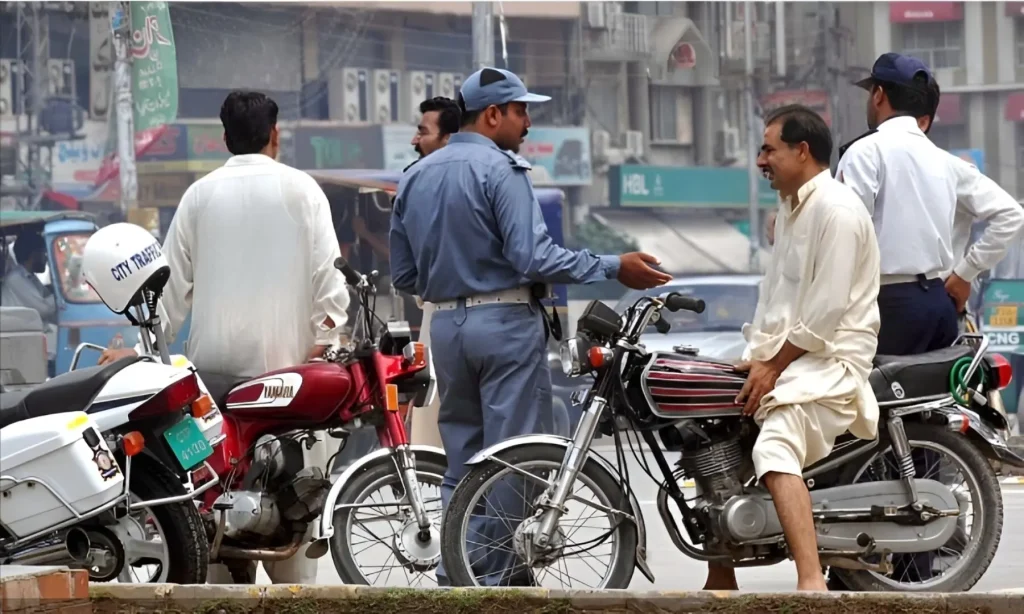
Parents and lawyers warned that detaining minors for traffic violations risked saddling them with criminal records and jeopardising their futures. Within days, the political and legal pressure mounted. As a result, Punjab Chief Minister Maryam Nawaz Sharif expressed displeasure over minors being handcuffed for breaking traffic rules, saying she did not want to arrest children, and ordered that first‑time violations by underage riders should result in warnings rather than punishments.
A traffic police official fines a motorcyclist in Punjab. — Punjab Traffic Police website
The Lahore High Court Chief Justice, Aalia Neelum, also intervened, instructing authorities to halt arrests of underage drivers and focus on awareness campaigns and warnings for first-time offences.
Responding to the backlash and the court’s order, the provincial government announced it would allow 16‑year‑olds to obtain motorcycle licences and smart cards, moving away from the usual age of 18. This was a major policy shift aimed at acknowledging a reality that many riders, parents, police and legal experts have long struggled to reconcile.
However, the newly proposed initiative has opened a deeper debate about accountability, maturity, enforcement and whether the state is regulating reality or retreating from responsibility.
The law, rewritten
Officials, including Deputy Inspector General (DIG) Traffic Police Lahore Athar Waheed, described the move as an attempt to regulate an already widespread practice rather than introduce a radical departure from existing law.
“In many countries, licences at 16 or 17 are provisional,” Waheed told Dawn. “We will call it a juvenile driving permit, and it will only be for motorcycles.”
He explained that amendments are being drafted to the Motor Vehicle Rules, including a proposed new Article 19-A, to accommodate the change. Under the proposal, the permit would be issued through the same process as a regular licence, requiring physical presence, medical fitness, and testing to establish riding competence, and would remain valid for two years.
DIG Waheed said the rationale behind the amendment was rooted in demographic and social realities, noting that millions of teenagers commute daily, often already riding motorcycles, while enforcement against underage driving has historically been limited.
On criminal liability, he drew a clear distinction, saying: “If a juvenile is given a permit, then a parent will not be responsible, as it will be their own responsibility.”
However, he added that strict action would continue in cases of illegal underage driving.
“If someone under 16 is driving and causes an accident, then whoever has purchased the vehicle or abetted them will face criminal proceedings.”